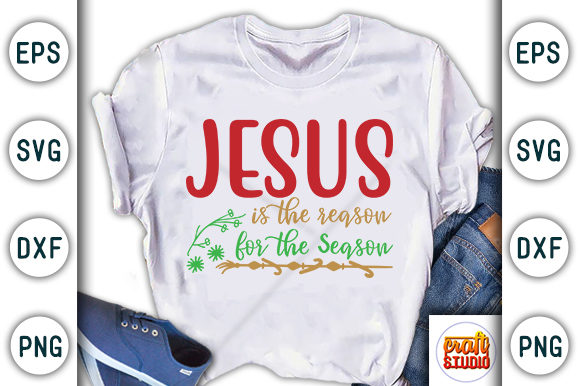
Christmas Jesus Is the Reason for the Season: A Strategic Refocus on Purpose and Impact
Every December, the phrase “Jesus is the reason for the season” appears on signs, social media posts, and greeting cards. For many, it is a simple declaration of faith. But for professionals, creators, and decision-makers, the idea that Christmas Jesus is the reason for the season can serve as a meaningful strategic anchor. When understood thoughtfully, this perspective shifts how you approach planning, communication, branding, and long-term outcomes. It is not just a religious sentiment; it is a reminder that purpose precedes productivity, and meaning matters more than motion.
In a business and creative environment that often prioritizes volume over value, the reminder that Christmas Jesus is the reason for the season invites a deliberate pause. It asks: What are we really working toward? What message are we sending? Are we adding noise or signal? For entrepreneurs, marketers, educators, and freelancers alike, this kind of refocus can be the difference between seasonal burnout and sustainable impact.
What Christmas Jesus Is the Reason for the Season Actually Means for Your Work
At its core, the statement that Christmas Jesus is the reason for the season centers on origin and intention. It asserts that the holiday exists because of a specific historical and theological event: the birth of Jesus Christ. For a professional audience, this principle translates into a powerful lesson about rootedness. Every initiative, campaign, or product launch has a reason for existing. When you identify that reason clearly, you make better decisions about resource allocation, messaging, and timing.
Consider how you might apply this to your own context. If you run a small business, do you know why you offer certain holiday promotions? Is it because everyone else does, or because you have a clear connection between your values and the season? If you are a content creator, does your December content reflect a genuine message, or simply fill a calendar slot? The discipline of asking “What is the reason for this?” mirrors the core of the Christmas message itself.
Practically, the phrase Christmas Jesus is the reason for the season can function as a strategic filter. Before you approve a project, write a post, or allocate a budget, ask: Does this align with the deeper purpose I want to communicate? If the answer is unclear, you may be operating on autopilot. The most effective professionals use such filters to maintain coherence across their work.
Why This Perspective Is Strategically Useful for Professionals and Creators
In a saturated marketplace, differentiation often comes from clarity. When you operate from a clear center — a reason for what you do — your audience notices. The idea that Christmas Jesus is the reason for the season provides a natural example of how a single, well-defined purpose can guide an entire season of activity. For a business or brand, this translates into positioning. You are not just selling a product or service; you are offering an experience rooted in a value system.
For marketers and brand strategists, this means you can build campaigns that resonate on a deeper level. Rather than competing on discounts or generic holiday cheer, you can emphasize meaning, tradition, and intentionality. Audiences — especially adults navigating complex lives — respond to authenticity. When your communication reflects that Christmas Jesus is the reason for the season, even if you adapt the concept for a secular audience, you signal that you have thought about why you exist during this time of year.
For educators and bloggers, the strategic utility lies in framing. You can use the phrase as a lens to discuss topics like purpose, decision-making, and long-term thinking. It becomes a case study in how a central belief shapes behavior. Freelancers and creators can apply the same logic to their personal branding: what is the reason you do what you do? When you articulate that clearly, clients and collaborators understand your value beyond surface-level transactions.
How Thoughtful Use Can Support Planning and Decision-Making
Planning is often where good intentions unravel. The pressure to produce content, launch offers, and meet year-end goals can crowd out reflection. This is where the principle behind Christmas Jesus is the reason for the season becomes a practical tool. Use it as a decision-making heuristic. When you face a choice about how to spend your time or money in December, ask: Does this option honor the core reason for this season?
For example, an entrepreneur might decide to cap promotional emails at two per week, choosing instead to invest in a single, high-quality message about gratitude and service. A marketer might shift from aggressive sales tactics to storytelling that highlights community impact. A blogger might write a reflective piece on what it means to prioritize purpose over pace. Each of these decisions flows from a central belief that Christmas Jesus is the reason for the season — or, more broadly, that purpose should drive activity.
From a productivity standpoint, this approach reduces decision fatigue. When your core reason is clear, you spend less time debating options. You move faster because your criteria are defined. This is not about religious observance alone; it is about the strategic advantage of having a north star during a chaotic period.
When to Use This Approach and What to Consider First
The most effective use of the Christmas Jesus is the reason for the season concept comes when you align it with your specific context. If your audience, team, or customer base shares your values, you can lean into the phrase directly. If your audience is more diverse, you can apply the principle behind it — purpose-driven action — without using explicit language.
Consider using this approach when:
- Planning your December content calendar — Let the reason guide your topics, tone, and frequency.
- Designing customer experiences — Think about how every touchpoint reflects your core message.
- Setting year-end goals — Use the season as a natural moment to reassess your larger mission.
- Communicating with teams or clients — Explain the “why” behind your holiday strategy to build trust.
- Creating products or services — Ask whether your offering adds genuine value or simply fills a gap.
Before relying on this perspective, consider your audience’s context. If you operate in a global or secular environment, emphasize the universal themes of purpose, intention, and service that the phrase represents. The goal is not to impose a belief, but to extract the strategic wisdom embedded in the idea that a single reason can unify and direct an entire season of work.
Practical Examples Across Professional Roles
To see how Christmas Jesus is the reason for the season translates into action, consider these realistic use cases:
Example 1: A small business owner runs a boutique gift shop. Instead of running generic “20% off everything” promotions, she creates a campaign around the idea of meaningful giving. She writes product descriptions that emphasize the stories behind each item, and she donates a portion of proceeds to a local charity. Her messaging reflects that Christmas Jesus is the reason for the season — not through explicit religious language, but through an emphasis on generosity and thoughtfulness. Sales increase, but more importantly, customer loyalty deepens.
Example 2: A freelance writer pitches a series of articles to a lifestyle publication. Each piece explores how professionals can find clarity during the holiday rush. One article is titled “The One Question That Will Simplify Your December.” It uses the logic of the season’s reason to help readers prioritize. The writer positions herself as someone who thinks strategically about meaning, attracting new clients who value that perspective.
Example 3: A marketing manager at a mid-sized company reviews the holiday campaign. She notices the team has planned seven email blasts, three social media contests, and a pop-up event. She asks: What is the reason for all of this? The team realizes they have no clear answer. They consolidate the efforts into three well-planned touchpoints, each tied to a core message about gratitude and connection. The campaign performs better than previous years, with higher open rates and fewer unsubscribes.
Possible Risks of Using the Christmas Jesus Is the Reason for the Season Idea Without Clear Goals
Any strategic tool can backfire if applied without context. The phrase Christmas Jesus is the reason for the season carries strong cultural and religious connotations. Using it carelessly — or using it as a gimmick — can alienate audience segments, create confusion, or appear performative. If your team or customers do not share the underlying belief, forcing the phrase into your messaging may feel disingenuous.
Another risk is inertia disguised as purpose. Some professionals use the idea to justify doing less, or to avoid making hard decisions about resource allocation. While reflection is valuable, it must lead to action. The question “What is the reason?” should prompt clarity, not paralysis. If you use the phrase without connecting it to specific goals, you may end up with a nice sentiment but no measurable outcome.
There is also the risk of oversimplification. The statement that Christmas Jesus is the reason for the season is profound in its original context, but when applied to business or creative work, it requires translation. You cannot simply import a theological phrase into a marketing strategy and expect it to carry the same weight. You must do the work of connecting the principle to your specific domain. Otherwise, it becomes hollow.
Finally, be aware of audience fatigue. If every year you use the same message without evolving it, your audience may tune out. The principle can be a foundation, but your execution needs to adapt to changing circumstances. Use the core idea as a steady reference point, not a repetitive slogan.
How to Use Christmas Jesus Is the Reason for the Season Intentionally
Intentional use begins with self-assessment. Before you apply the concept to your work, clarify what it means for you personally and professionally. Are you using it because it aligns with your values, or because it feels like a safe seasonal message? The difference matters because audiences detect authenticity.
Next, define your strategic objective. What do you want to achieve by centering your season around this reason? Is it brand differentiation, team alignment, customer connection, or personal focus? Write down the outcome you are aiming for. Then, design your actions to support that outcome.
Use the phrase as a litmus test for every December decision. Before you approve a graphic, write a caption, or schedule a meeting, ask: Does this reflect the reason we are doing this? If the answer is no, reconsider. This single practice can save hours of wasted effort and produce higher-quality output.
Consider also how you will communicate the intention to others. If you lead a team, share the reasoning behind your seasonal strategy. Explain that you are using the idea of a central purpose to guide decisions. This transparency builds trust and invites collaboration. It also ensures that everyone understands the “why,” which makes execution smoother.
Finally, measure the impact. After the season, review what worked. Did your focus on purpose lead to better engagement, clearer messaging, or stronger relationships? Did it reduce stress or improve decision quality? Use these insights to refine your approach for the following year. The goal is not to repeat the same tactic, but to deepen your understanding of how purpose drives results.
Strategic Observations for Long-Term Value
The most durable professional advantage comes not from tactics, but from principles. The idea that Christmas Jesus is the reason for the season is, at its heart, a principle about centrality. It teaches that when you know your center, you can navigate complexity with confidence. This lesson applies far beyond December.
For entrepreneurs, it suggests that your business should have a clear reason for existing that transcends profit. For marketers, it implies that your campaigns should have a conceptual anchor, not just a promotional angle. For creators, it reinforces the value of working from a thesis rather than from trends. For educators, it models how a single, well-articulated idea can organize an entire curriculum or conversation.
Long-term, the professionals who thrive are those who can answer the question “Why does this exist?” with clarity and conviction. The seasonal reminder that Christmas Jesus is the reason for the season is an invitation to practice that discipline. Use it not as a slogan, but as a strategic tool. Let it sharpen your focus, simplify your decisions, and deepen the value you offer to others.
When you approach the season with intentionality — whether you work in a corporate office, run a freelance practice, or lead a creative team — you honor the deeper purpose behind the holidays. You also position yourself to make better decisions, build stronger connections, and achieve results that matter beyond the calendar.
The reason for the season is not just a statement of faith. It is a framework for clarity. Apply it thoughtfully, and it will serve you long after the decorations come down.