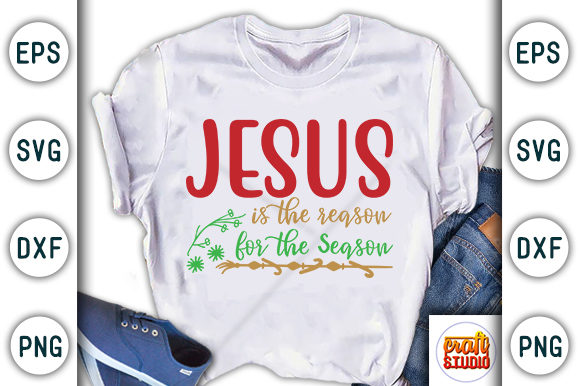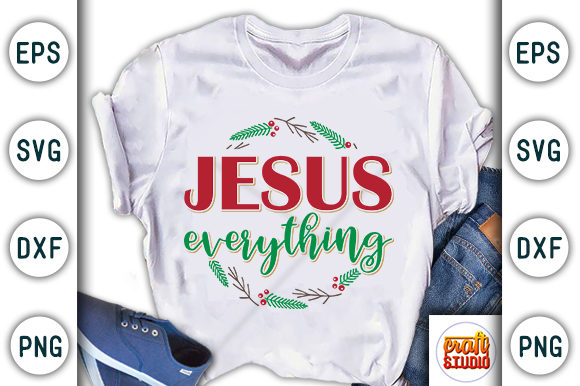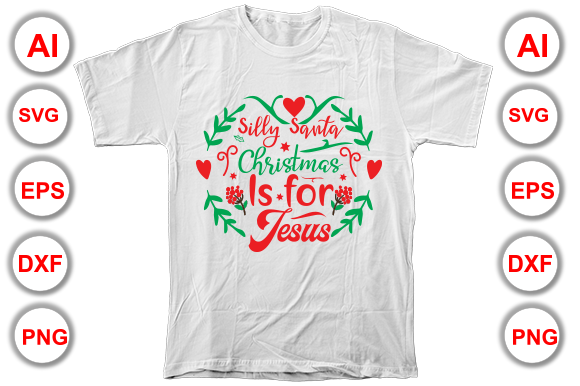
Christmas Design, Jesus is the Reason: Strategic Purpose Behind the Season's Creative Direction
Every December, businesses, ministries, and creators face a familiar question: how do we design for Christmas in a way that stands out, resonates, and actually serves our goals? The phrase Christmas Design, Jesus is the Reason has become a touchstone for those who want their visual and messaging choices to carry intentional meaning rather than seasonal noise. At its core, this approach is not merely about adding nativity scenes or scripture verses to a template. It is a strategic decision to let a central truth—the birth of Jesus as the foundation of the season—inform every creative output, from a social media graphic to a storefront window to a year-end campaign.
For professionals and decision-makers, treating Christmas Design, Jesus is the Reason as a guiding principle can transform how you allocate resources, communicate with your audience, and build long-term brand equity. This article explores why this approach may be strategically useful, how to implement it thoughtfully, and what to consider before you commit to it.
Why Christmas Design, Jesus is the Reason Matters for Strategic Communication
In a marketplace saturated with generic holiday imagery—snowflakes, reindeer, and generic "Season's Greetings"—designing with a clear anchor differentiates you. Christmas Design, Jesus is the Reason provides that anchor. It is not about being overtly religious for its own sake; it is about coherence. Every design choice, from color palette to typography to messaging, can trace back to a single, meaningful premise. This clarity reduces decision fatigue for your creative team, strengthens audience recognition, and ensures your holiday content does not get lost in the shuffle.
From a positioning standpoint, audiences aged 20 to 50 are increasingly skeptical of empty seasonal marketing. They can tell when a brand is simply going through the motions. By contrast, a deliberate focus on Christmas Design, Jesus is the Reason signals that you have thought about what the season actually means. This can build trust with users who share that conviction, and even those who do not may respect the authenticity. The key is to execute with taste and restraint, not with heavy-handed messaging that alienates.
Supporting Long-Term Branding and Audience Loyalty
Brands that consistently align their visual language with a core value—whether that value is family, generosity, or faith—tend to earn deeper loyalty. When you embed Christmas Design, Jesus is the Reason into your December planning, you are making a statement about your identity. That statement can resonate powerfully with customers, subscribers, or community members who share that perspective. For small business owners and creators, this kind of alignment is particularly cost-effective because it does not require a massive budget; it requires clarity and conviction.
Moreover, using this theme year after year creates a recognizable tradition. Your audience begins to anticipate your Christmas content because they know it will feel coherent rather than chaotic. This anticipation is a form of brand equity that compounds over time. Whether you are a blogger writing Advent reflections, a publisher creating a holiday gift guide, or a retailer decorating your physical space, the repetition of a meaningful design language reinforces your place in the minds of your audience.
Aligning Creative Choices with a Clear Core Message
One of the most practical benefits of adopting Christmas Design, Jesus is the Reason is the filter it provides for creative decisions. When you are unsure whether an image, a font, or a color scheme works, you can ask a simple question: does this reflect the reason for the season? This is not about limiting creativity but about focusing it. A focused creative direction often yields more impactful work than a scattered one.
Consider the typical December calendar for a marketing team or solo entrepreneur. There are email campaigns, social posts, blog articles, video content, possibly a physical event or a pop-up. Without a unifying theme, each piece can feel like its own isolated effort. With Christmas Design, Jesus is the Reason as your north star, you can create a cohesive system. That might mean using a specific color palette derived from traditional Advent tones—deep purple, rose, gold, or the stark contrasts of a nativity scene—or it might mean choosing imagery that focuses on light, hope, and humility rather than consumerism.
Practical Applications Across Branding, Content, and Customer Experience
Let me offer several concrete use cases. A freelance graphic designer could use Christmas Design, Jesus is the Reason to inform a limited-edition set of printable wallpapers or greeting cards. The designs would not just be pretty; they would communicate a specific narrative. A church or ministry might apply this to their full December communication stack—bulletins, social media, website banners—ensuring that every visual element points toward the incarnation. A small business owner selling handmade goods could use the theme to craft product descriptions and packaging that tie back to the idea of giving, humility, and light, rather than just "holiday cheer."
For educators and content creators, this theme can shape an entire digital product. An online course or a series of Advent devotionals could use Christmas Design, Jesus is the Reason as the visual and structural backbone. The lesson layouts, the color coding, the iconography—all of it works together to reinforce the central idea. This kind of intentionality is what separates memorable content from forgettable content.
When to Lead with Christmas Design, Jesus is the Reason in Your Planning
Timing matters. If your audience is primarily composed of people who are not looking for a faith-based message during the holidays, leading with Christmas Design, Jesus is the Reason might feel dissonant. However, even in a general market, there is a way to use it effectively. The key is to lead with the design values that arise from the theme—simplicity, warmth, authenticity, hope—rather than with overt theological language. You can let the imagery speak for itself. A nativity silhouette, a warm star, a muted gold palette—these elements convey the idea without requiring a statement.
For audiences that are explicitly Christian or faith-interested, leaning in more directly is not only appropriate but expected. In that context, Christmas Design, Jesus is the Reason becomes a point of connection. It signals that you understand their priorities and are not trying to water down the message for mass appeal. The strategic move is to know your audience and calibrate the intensity of the theme accordingly.
Planning Tips for Implementation
- Start early. Lock in your design direction by October or early November. Rushed holiday design rarely feels intentional. Give yourself time to explore what Christmas Design, Jesus is the Reason looks like across different formats.
- Create a mood board. Gather images, textures, and color swatches that reflect the theme. Share this with anyone who touches your holiday content—writers, designers, social media managers. Consistency requires shared vocabulary.
- Map the customer journey. Identify every touchpoint a user might have with your brand in December. Email, website, social, packaging, in-store signage. Then decide how each touchpoint can subtly or directly reflect Christmas Design, Jesus is the Reason.
- Test a soft launch. If you are unsure about audience reception, try the theme on one channel first. Monitor engagement and feedback before rolling it out everywhere.
- Build in flexibility. Not every piece of content needs to scream the theme. Some pieces can simply be neutral, while others carry the full weight of the message. That balance prevents fatigue.
Strategic Observations on Outcomes and Decision-Making
When deployed thoughtfully, Christmas Design, Jesus is the Reason can improve more than just aesthetics. It can improve how your team operates. With a clear creative brief rooted in a single premise, decision-making accelerates. Designers spend less time debating options. Writers have a clearer tone of voice. Stakeholders approve work faster because the criteria for success are explicit. This efficiency is especially valuable for small teams and solo operators who cannot afford endless rounds of revision.
From a productivity standpoint, the constraint of a focused theme can actually boost creativity. Rather than staring at a blank page and wondering what to do, you start with a rich set of associations—light, hope, humility, incarnation, the anticipation of Advent, the joy of Epiphany. These provide a reservoir of ideas that you can draw from, adapt, and combine. The result is work that feels deeper and more resonant than a generic holiday collage.
Long-Term Value and Audience Trust
Over several seasons, the cumulative effect of intentional Christmas Design, Jesus is the Reason work is a stronger relationship with your audience. They come to see your brand as one that operates from a place of purpose, not just profit. This perception is valuable in an era where consumers increasingly want to support organizations whose values align with their own. For entrepreneurs and small business owners, this trust can translate into repeat purchases, word-of-mouth referrals, and a community that engages beyond the holiday season.
Moreover, the discipline of designing with a central reason carries over into other parts of your work. The habit of asking "why does this design exist?" and "what is the core message here?" is transferable to any campaign, any quarter, any product launch. Christmas Design, Jesus is the Reason becomes not just a seasonal tactic but a case study in purposeful creative direction.
The Risks of Decorating Without Direction
The opposite of intentional design is randomness. A brand that uses generic holiday clip art, unclear messaging, or a mix of conflicting tones risks confusing its audience. More importantly, it misses an opportunity to communicate anything memorable. If you use Christmas Design, Jesus is the Reason without clear goals—or worse, if you use it superficially, just slapping a cross on a generic template—you may actually do more harm than good. Audiences are perceptive. They can feel when a theme is being used for convenience rather than conviction.
Another risk is alienating part of your audience through tone-deaf execution. If your design is too insistent, too dogmatic, or too disconnected from your usual brand voice, it can feel like a bait-and-switch. The solution is not to avoid the theme but to integrate it with the same strategic discipline you apply to the rest of your work. Ask: does this design serve our audience? Does it reflect our actual values? Or are we just trying to capitalize on a sentiment?
How to Approach Christmas Design, Jesus is the Reason with Intention
- Define your goal. Are you trying to build community, drive sales, educate your audience, or reinforce brand identity? Your goal will determine how heavy or light the theme feels.
- Choose your medium wisely. Some formats are better suited for explicit design themes. A long-form blog post or a video series can carry a deeper message. A quick social graphic might be better with a subtle nod.
- Involve your team. If you have collaborators, discuss the theme early. Get their input on what Christmas Design, Jesus is the Reason means to them. This creates buy-in and richer output.
- Measure what matters. Track engagement, feedback, and any direct outcomes. Did your holiday content perform better than last year? Did you receive comments or messages that indicate deeper connection?
- Iterate for next year. After the season, review what worked and what did not. Store your assets and notes so you can build on your approach in future Decembers.
Final Strategic Observations
Using Christmas Design, Jesus is the Reason as a design and communication strategy is not about being the loudest voice in the room. It is about being the clearest. In a noisy season, clarity is scarce. When you design with a genuine, well-articulated reason, you give your audience something to hold onto. Whether they are looking for hope, meaning, or simply a break from the commercial rush, a thoughtful design rooted in purpose can be a gift.
For the entrepreneur, the marketer, the educator, or the creator who wants to make December count, the decision to anchor your creative work in Christmas Design, Jesus is the Reason is a decision for depth over breadth. It may not appeal to everyone, but it will appeal deeply to those it reaches. And in a world of surface-level content, deep connection is the most valuable outcome you can achieve.