By His Wounds We Are Healed: Understanding the Depth of Atonement and Its Practical Place in Faith Today
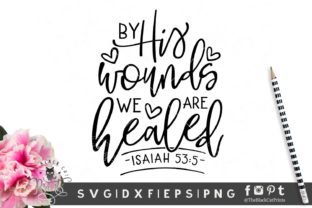
The phrase By His Wounds We Are Healed resonates through centuries of Christian tradition, yet its meaning often feels shrouded in theological language that can seem distant from daily life. Drawn from Isaiah 53:5 and echoed in 1 Peter 2:24, this declaration sits at the very heart of the gospel. But what does it actually mean for someone navigating a demanding career, strained relationships, or the quiet ache of personal failure? This article explores the substance behind that phrase and how it functions not merely as doctrine but as a living reality for modern believers.
The Foundation: More Than a Metaphor
When Scripture declares that By His Wounds We Are Healed, it is easy to assume this refers exclusively to physical healing. Certainly, the Gospels record numerous accounts of Christ healing the sick, but the context of Isaiah 53 points to something far more comprehensive. The prophet describes a suffering servant who is pierced for our transgressions and crushed for our iniquities. The healing in view here is primarily spiritual and relational—a restoration of the broken bond between humanity and God.
This nuance matters because it reframes how we approach suffering and need. Physical healing remains a valid dimension of faith, but the deeper promise is that the wounds of Christ address the root cause of all human brokenness: sin and separation from God. Understanding this prevents the phrase from becoming a simplistic formula for health and wealth, and instead anchors it in the reality of atonement.
The Nature of the Wounds
It is worth pausing to consider what those wounds entailed. Roman crucifixion was designed to be slow, public, and excruciating. The lashing, the thorns, the nails, the spear—each inflicted a specific kind of trauma. Yet the New Testament writers saw in these physical horrors a profound exchange. The punishment that brought peace fell upon Him, and By His Wounds We Are Healed became the central claim of apostolic preaching.
This is not a message that glosses over pain. Instead, it acknowledges that suffering is real, deep, and often unjust. The cross does not offer a quick escape from hardship but rather a transformation of its meaning. The wounds of Christ become the channel through which grace flows, and believers are invited to find their own healing not in the absence of suffering but in its redemption.
Practical Dimensions of Healing in Daily Life
The phrase By His Wounds We Are Healed is not meant to remain abstract. It has tangible implications for how Christians approach their emotional health, relational conflicts, and even their work ethic. Let us consider several practical arenas where this truth takes root.
Emotional and Psychological Restoration
Many people carry invisible wounds—shame, guilt, anxiety, bitterness. These are not always addressed by a simple change of behavior. They require a deeper kind of healing that addresses the heart. When a person internalizes that By His Wounds We Are Healed, they begin to see their own failures and traumas in a new light. The guilt of past sin is not merely dismissed but atoned for. The shame that whispers you are beyond repair is confronted by the reality that Christ took that shame upon Himself.
For someone struggling with self-forgiveness, this doctrine offers a concrete anchor. If God has already dealt with the offense through the wounds of His Son, then continuing to punish oneself becomes a refusal to accept that completed work. Healing in this context is not a feeling but a decision to receive what has already been accomplished.
Relational Reconciliation
Relationships suffer because people sin against each other. Forgiveness is often difficult because the wrong feels real and the debt seems unpaid. But when a believer grasps that By His Wounds We Are Healed, they begin to see that their own offenses against others were also laid on Christ. This creates a basis for extending grace. Not because the offense was minor, but because a greater payment has already been made.
Consider a scenario where a business partnership fractures due to betrayal. The injured party may feel justified in holding a grudge. Yet the logic of the cross suggests that the deepest debt—the one owed to God—has been satisfied. That reality can loosen the grip of resentment and open the door to reconciliation, even when trust must be rebuilt slowly over time.
Healing and the Modern Workflow of Faith
In contemporary Christian life, the phrase By His Wounds We Are Healed can easily become a slogan repeated in worship songs without much reflection. But integrating this truth into a practical "workflow" of discipleship is possible and beneficial. Here are several ways to let this doctrine shape routine spiritual practices.
Prayer and Confession
Prayer becomes more honest when we remember that healing has already been secured. Instead of begging God to forgive as if He is reluctant, believers can confess sin with confidence, knowing that By His Wounds We Are Healed guarantees a receptive hearing. This shifts confession from a fearful ritual to a restorative conversation.
- Examine the day honestly—identify where you have fallen short.
- Name the specific sin—bring it into the light rather than vague generalities.
- Receive the verdict—remind yourself that Christ's wounds have already addressed that failure.
- Move forward—do not dwell in guilt but in gratitude for the finished work.
Counseling and Community Support
Professional counseling and pastoral care are not opposed to the gospel; they can be vehicles through which the reality of By His Wounds We Are Healed becomes experiential. A skilled counselor helps a person unpack the lies they believe about themselves—lies of worthlessness, rejection, or unforgivable failure. The truth of Christ's atoning work directly confronts each of those lies.
In group settings, sharing struggles becomes safer when the group collectively holds that healing is not dependent on performing well but on receiving grace. This creates an environment where vulnerability is met not with judgment but with the same compassion Christ extended on the cross.
Common Misunderstandings and Considerations
Before fully embracing the promise that By His Wounds We Are Healed, it is worth addressing some common concerns that arise when people encounter this teaching.
The Tension with Ongoing Suffering
If Christ's wounds bring healing, why do believers still get sick, experience depression, or face tragedy? This is perhaps the most frequent question. The biblical answer maintains a distinction between the already and the not yet. Healing in its fullest sense—spiritual, physical, emotional, and relational—will be fully realized only when Christ returns and creation is renewed. In the present age, believers experience genuine but partial healing. The resurrection body awaits the final day.
This avoids a prosperity-oriented view that guarantees physical health in this life, while still affirming that real healing occurs now. A person can be spiritually whole even while enduring a chronic illness. The deepest wound—separation from God—is already healed, and that changes everything.
The Danger of Passive Interpretation
Another misconception is that By His Wounds We Are Healed implies passivity. If healing is already accomplished, why pursue growth, therapy, or medical treatment? The answer lies in understanding that grace does not eliminate effort; it empowers it. The believer works out their salvation, but the work is grounded in what has already been done. Seeking counseling, taking medication, or practicing forgiveness are not denials of faith but expressions of it.
Practical recommendation: If you are struggling with deep emotional wounds, pursue both prayer and professional help. Let the truth of Christ's atonement be the foundation, but use the tools God has placed within your reach. The two are not in conflict.
How This Shapes Worship and Identity
Worship is not merely singing; it is the orientation of one's entire life around the worth of God. When a congregation gathers and declares that By His Wounds We Are Healed, they are rehearsing the central narrative that defines them. This is not empty repetition. It is a ritual that shapes identity.
Over time, the repeated affirmation of this truth rewires how a person sees themselves. They are no longer defined by their worst mistakes or their deepest pains. They are defined by the exchange that took place at Calvary. Their identity shifts from wounded sinner to healed child of God. This is not psychological manipulation; it is the natural fruit of meditating on what is most real.
Observations from Church History
Throughout church history, the phrase By His Wounds We Are Healed has been a source of comfort in periods of persecution, plague, and personal loss. The early church fathers wrote extensively about the medicinal nature of Christ's suffering. They saw the cross as a clinic where the virus of sin was cured. This historical perspective reminds modern believers that they are part of a long tradition of people who found hope not in their own resilience but in the wounds of another.
For anyone exploring the Christian faith, this phrase offers a clear entry point. It asserts that God does not stand aloof from human suffering but enters into it and transforms it from within. The invitation is not to escape pain but to bring it to the One who has already borne the ultimate weight of it.
Bringing It All Together
By His Wounds We Are Healed is not a slogan to be worn on a bracelet and forgotten. It is a comprehensive declaration about the nature of God's love and the scope of Christ's work. It addresses the deepest human needs: guilt, shame, alienation, and fear of death. It provides a foundation for emotional healing, relational reconciliation, and a transformed identity.
For those navigating a modern world filled with anxiety, burnout, and fractured relationships, this ancient truth remains relevant. It does not promise a trouble-free life but guarantees that the ultimate problem has been solved. The wounds of Christ are not a relic of history; they are a present source of healing for anyone willing to receive it.
Whether you are a longtime believer or someone just beginning to ask questions about faith, let this phrase linger in your mind. Reflect on it. Test it against your own experience. Consider what it would mean if it were true. And if you find it to be true, let it shape not only your beliefs but your daily decisions, your relationships, and your hope for the future. That is what it means to live in the reality that By His Wounds We Are Healed.