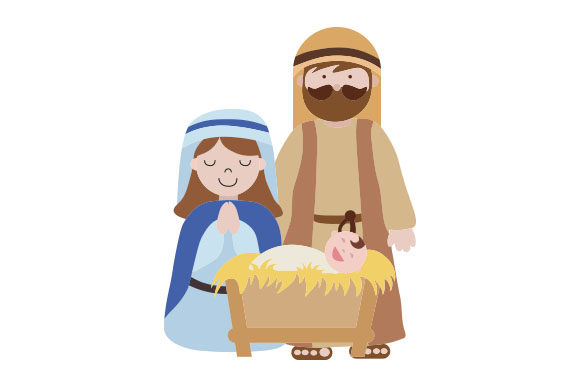
The Enduring Symbolism of Jesus in the Manger: More Than a Nativity Scene
The image of Jesus in the Manger is one of the most recognizable and enduring symbols in Western culture. It appears on greeting cards, in public squares, on stage at school pageants, and in the quiet corners of thousands of homes each December. Yet, for all its familiarity, the manger scene holds layers of meaning that many people pass over without a second thought. It is not merely a decorative tableau or a sentimental reminder of a holiday story. It is a statement about humility, accessibility, and the radical nature of divine love entering the world in the most vulnerable form imaginable.
Understanding the nativity story requires looking beyond the plaster figures and soft lighting. The setting itself—a feeding trough for animals—was never meant to be picturesque. In first-century Judea, mangers were practical, rugged, and often dirty. They were not the pristine wooden cradles depicted in art. Choosing to place a newborn in such a space was an act of profound intentionality in the biblical narrative. It signaled that this arrival was not for the privileged or the powerful but for everyone, starting with the least of society.
The Historical Reality Behind the Manger
To appreciate the full weight of Jesus in the Manger, it helps to strip away the romanticism and consider the actual historical circumstances. The Gospel of Luke provides the only detailed account of the birth, describing how Mary "wrapped him in swaddling cloths and laid him in a manger, because there was no place for them in the inn." This single verse has shaped two millennia of theology, art, and devotion.
The term "inn" is debated among scholars. Some argue it refers to a guest room in a private home rather than a commercial lodging. In either case, the family found themselves in a space shared with animals—likely a cave or a stable attached to a house. The manger, therefore, was not a makeshift crib of last resort but a deliberate placement that carried deep resonance for the original audience. In Jewish scripture, the prophet Isaiah had spoken of the ox and donkey knowing their master's manger, a detail that early Christians saw as fulfilled prophecy.
This historical grounding matters because it transforms the scene from mere sentiment into something with real texture. The smell, the noise, the lack of privacy—these are not details to gloss over. They are central to the claim that God was entering human reality at its most raw and unglamorous. The manger becomes a symbol of incarnation itself: the divine choosing to dwell not in temples or palaces but in the ordinary, the overlooked, and the humble.
What the Manger Reveals About Accessibility
One of the most striking features of the Jesus in the Manger narrative is who comes to visit. The shepherds, considered by many in their society as unclean and unreliable, are the first to receive the angelic announcement. They are not scholars, priests, or rulers. They are night-shift workers on the margins of respectability. Yet they are invited to approach the manger without hesitation or ceremony.
This accessibility is a cornerstone of the story's enduring appeal. The manger is not behind a velvet rope or inside a gilded sanctuary. It is open to anyone willing to make the journey. For people today, this speaks to a faith that does not require credentials, wealth, or status. It suggests that spiritual encounter is available in the most ordinary circumstances—in a stable, in the middle of the night, to people who smell like sheep.
In practical terms, this quality invites reflection on how modern communities create spaces of welcome. Are our places of worship, community centers, and even homes structured to be accessible to the outsider? The manger challenges the instinct to curate who is allowed near the center of our lives. It models a hospitality that is uncalculated and generous.
The Manger in Art, Tradition, and Modern Practice
The visual tradition of depicting Jesus in the Manger began early in church history, but it was Saint Francis of Assisi in the 13th century who popularized the living nativity scene. His goal was not artistic but pedagogical—he wanted to help illiterate worshippers experience the story with their senses. That tradition continues today in thousands of churches and schools each December.
The nativity set, whether elaborate or simple, serves several functions beyond decoration. It creates a focal point for family devotion, a teaching tool for children, and a quiet reminder of the season's deeper meaning. Many families pass down nativity figures from generation to generation, each chip or crack telling a story of Christmases past. The act of setting up the manger scene becomes a ritual that grounds the holidays in something more substantial than shopping and cooking.
For those who do not consider themselves religious, the manger scene can still hold power as a cultural symbol. It represents peace, new beginnings, and the idea that greatness can emerge from the most unlikely origins. The image of a child in a manger resonates because it is universally human—everyone was once a vulnerable infant dependent on the care of others.
Modern Applications of the Manger's Message
If the manger teaches anything applicable to contemporary life, it is the value of starting small. In an age obsessed with scale, metrics, and visibility, the nativity story suggests that the most significant changes often begin in obscurity. Leaders, entrepreneurs, and creators can find in the manger a model of patient, grounded beginnings.
Consider the concept of the "minimum viable product" in business—the simplest version of something that can still deliver value. The manger is a kind of minimum viable incarnation. It strips away everything unnecessary and focuses on the essential. There is no palace, no army, no elaborate ceremony. There is only a child, a family, and a feeding trough. Yet from this small start, a movement emerged that reshaped world history.
This principle applies to creative work, community organizing, and personal growth. The pressure to have everything perfect before launching or sharing can be paralyzing. The manger offers permission to begin where you are, with what you have, even if the setting is less than ideal. It is a reminder that authenticity and presence matter more than polish and venue.
Common Questions People Ask About the Nativity Story
People approaching the story of Jesus in the Manger for the first time, or revisiting it with fresh eyes, often have practical questions. These are worth addressing because they reveal the gap between popular culture and the actual text.
- Was the manger really a stable? The Bible does not specify a stable. Early tradition, supported by writings from Justin Martyr and Origen, placed the birth in a cave used to shelter animals. By the Middle Ages, the stable became the standard artistic representation.
- How many wise men were there? The Gospel of Matthew mentions three gifts—gold, frankincense, and myrrh—but does not give a number. The tradition of three magi came from the number of gifts, but early Christian art sometimes depicts two, four, or even twelve.
- Were the shepherds really outcasts? Shepherds occupied a low social status in first-century Judea. Their work made them ceremonially unclean and kept them away from religious observance. The choice to announce the birth to them first is significant and subversive.
- Why a manger specifically? The manger likely served the practical purpose of providing a clean, contained space for the baby. But symbolically, it connected Jesus to the prophecy of Isaiah and emphasized his identification with the poor and ordinary.
Observations on the Manger's Place in Contemporary Spirituality
For many people today, spirituality is less about doctrine and more about story, symbol, and practice. The Jesus in the Manger narrative fits naturally into this framework. It does not require theological education to understand. It appeals to the imagination and the heart. It works on multiple levels—historical, symbolic, emotional, and ethical.
Churches and ministries have found that nativity-focused programs, such as "Live Nativity" events or "Journey to Bethlehem" walk-through experiences, attract people who might not otherwise attend a service. These events engage the senses and create shared experiences. They allow participants to step into the story rather than just hear about it.
At home, families can use the manger scene as a springboard for conversations about hospitality, simplicity, and gratitude. Instead of treating the nativity set as a background decoration, parents can invite children to arrange the figures while telling the story. Some families practice a tradition of moving the Wise Men figures closer to the manger each day until they arrive on Epiphany. This builds anticipation and teaches patience.
Recommendations for Engaging with the Nativity Theme
Whether you are a pastor planning a sermon series, a teacher developing a lesson, a parent nurturing faith at home, or simply someone curious about the meaning behind the familiar scene, there are practical ways to go deeper with the manger story.
Start by reading the actual biblical accounts in Luke 2 and Matthew 1-2. Notice the details you may have missed. Pay attention to who is present and who is absent. Observe the emotions—fear, wonder, joy—that the characters experience. Then ask yourself what this story would look like if it happened today. Where would the manger be? Who would the shepherds be? What would the angels say?
Consider visiting a nativity display from a different cultural tradition. Many countries have unique ways of depicting the scene, incorporating local clothing, architecture, and animals. This can break the familiarity that sometimes dulls the story's impact. A Mexican nacimiento, a Polish szopka, or an Italian presepio can offer fresh perspectives on the same ancient event.
Finally, create space for silence. The manger is a quiet scene. It is easy to fill the season with noise and activity, but the story itself invites stillness. The Word became flesh and dwelt among us—and the first place that flesh rested was in a manger. That image, simple and profound, is worth sitting with.
The Jesus in the Manger is not just a Christmas decoration. It is a theological statement, a historical anchor, and a spiritual invitation. It speaks of a God who comes not in power but in vulnerability, not to the center but to the margins, not with fanfare but in the silence of a winter night. And it continues to speak, year after year, to anyone willing to pause and look.